

Igrexa de Santa María das Areas is a historic parish church in Fisterra, A Coruña, on the road toward Cabo Fisterra and its lighthouse. The church’s long history and mix of Romanesque, Gothic and Baroque features make it a heritage stop along the way; it is about 0.5 km from a one-star hotel in Cabo Finisterre.
- Location: at the foot of the mountain of Cabo Fisterra.
- Origins: dated to 1199 by the municipal tourism page.
- Architectural styles: Romanesque, Gothic and Baroque.
- Route: on the Camino de Fisterra-Muxía.
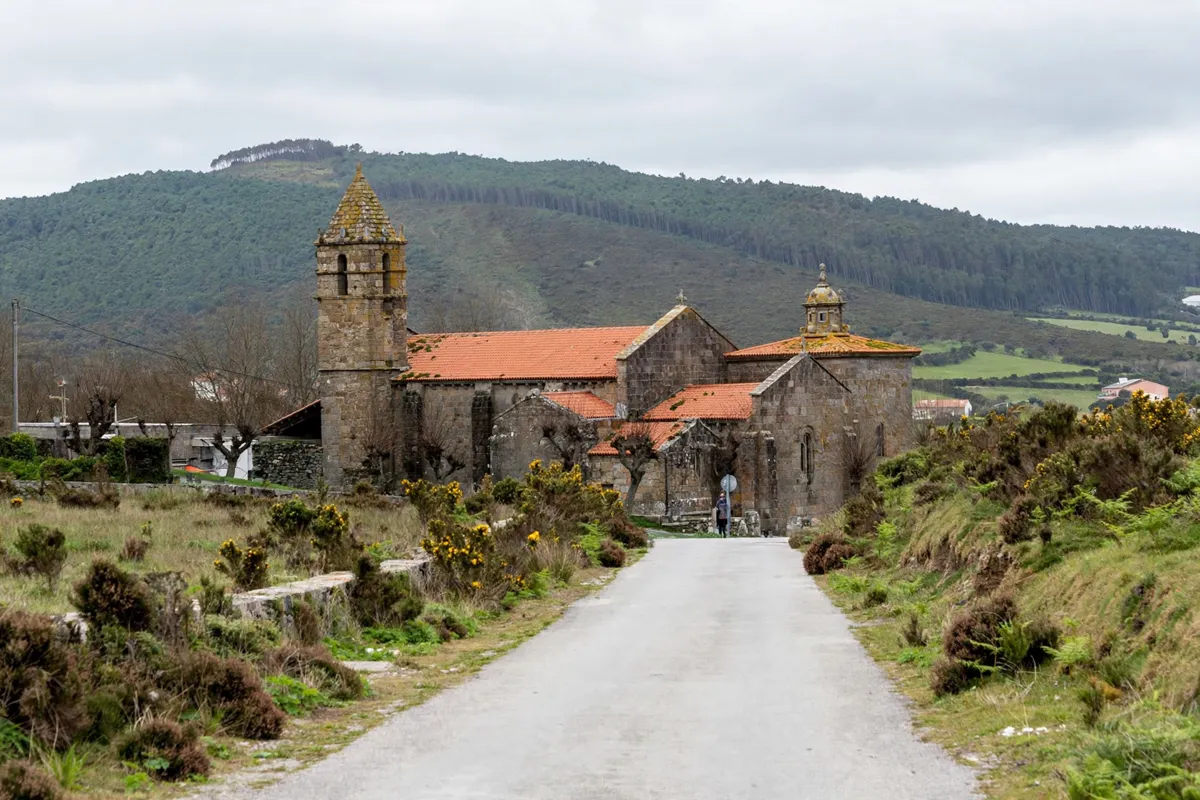
Finding Santa María das Areas
Santa María das Areas stands on the road from Fisterra’s municipal centre toward Cabo Fisterra, at the foot of Monte San Guillermo. Follow that road toward the cape to reach the church, which Tourism of Galicia lists as a Bien de Interés Cultural, or Asset of Cultural Interest.
The church is also on the Camino de Fisterra-Muxía. Its position makes it a natural heritage stop when following the route toward the cape; a one-day walking route through Finisterre can help put the visit in the context of a wider town walk.
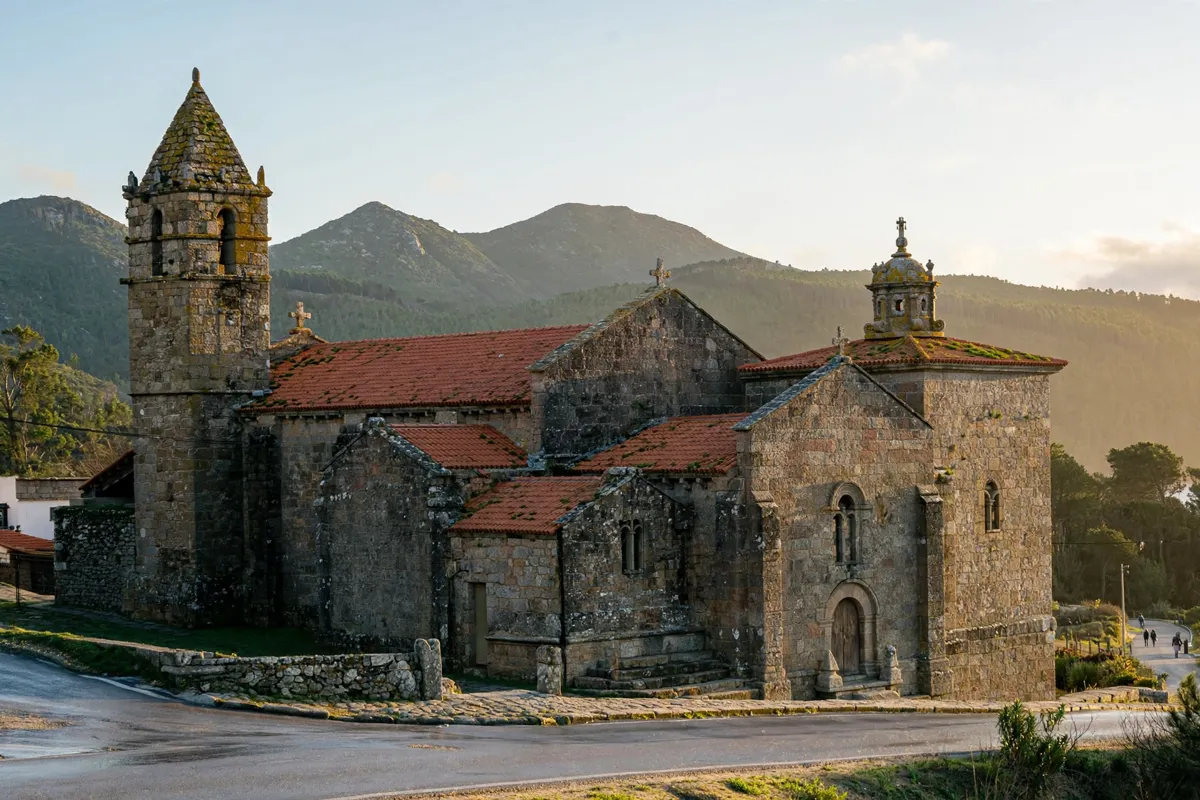
The church’s place in Finisterre’s history
The municipal tourism page dates the church’s origin to 1199, citing a donation document from Urraca Fernández, daughter of the Count of Traba. Tourism of Galicia says construction began in the 12th century, with later additions—especially in the 14th and 16th centuries—shaping the building seen today.
The church began with a quadrangular hall plan, according to the municipal account. Chapels and a sacristy were added over time, leaving a complex that brings together architectural styles from different periods. Opposite the main façade, a pilgrim hospital dedicated to Nuestra Señora del Rosario was founded in 1479 by parish priest Alonso García.
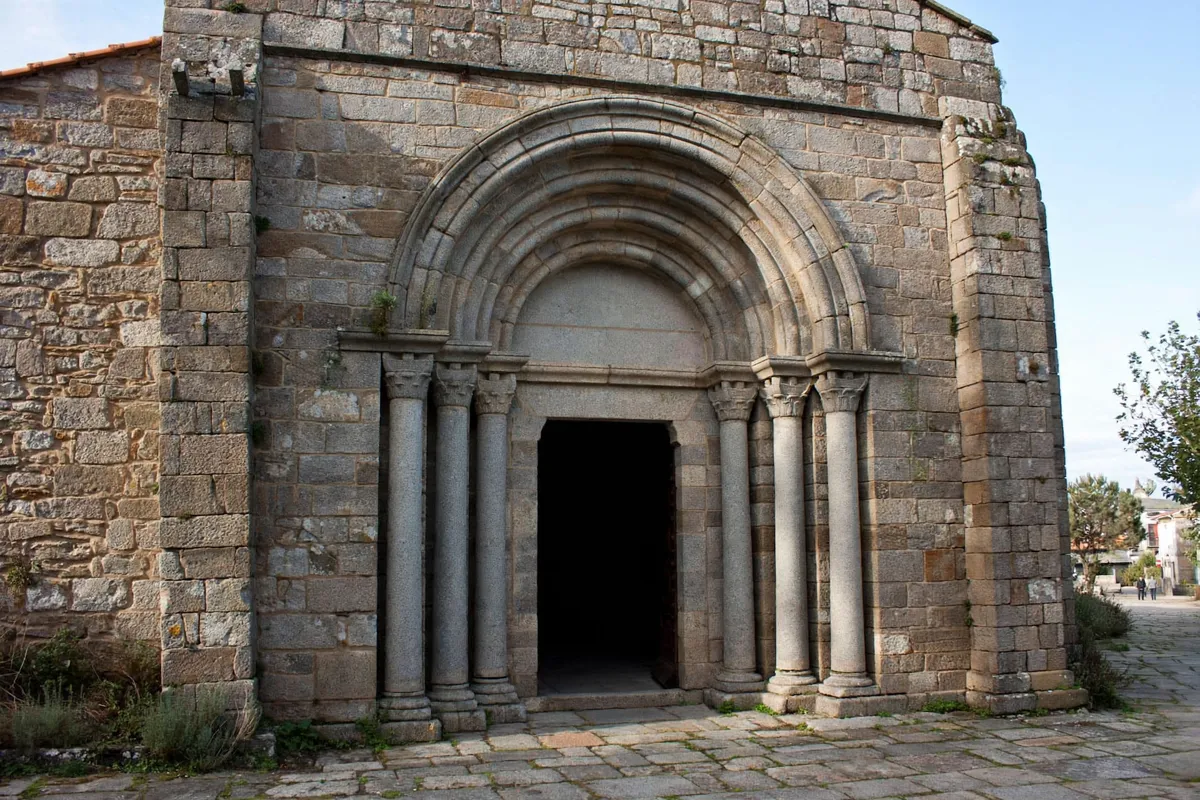
Architectural and devotional details
The entrance has two pairs of columns, archivolts and a plain tympanum; the towers rise in three sections and end in pyramidal tops. Inside, the central nave dates to the beginning of the 15th century and has Gothic arches and semi-columns. A 17th-century image of Santiago Pilgrim is also located in the nave.
The Chapel of the Holy Christ is a rectangular Baroque space. Construction began in 1695 to house the altarpiece containing the Holy Christ of Fisterra; the altarpiece dates to 1721 and is attributed to Miguel de Romay. The Gothic image is traditionally attributed to Nicodemus and dated to the early 14th century by the municipal tourism page.
Other chapels preserve their own layers of history. The baptistery, once called the Chapel of Santa Lucía, probably dates to between 1225 and 1250; it has a Gothic entrance arch and ribbed vault, as well as two tombs of benefactors.
The Chapel of Nuestra Señora del Carmen was founded in 1524 by María Blanca, widow of merchant Fernando de Mallo. Its Plateresque design includes an altarpiece donated by Mateo Pérez Valdivieso in 1741. The chapel now called the Purísima was founded by Roy Estévez and Alberta González on 3 April 1496.
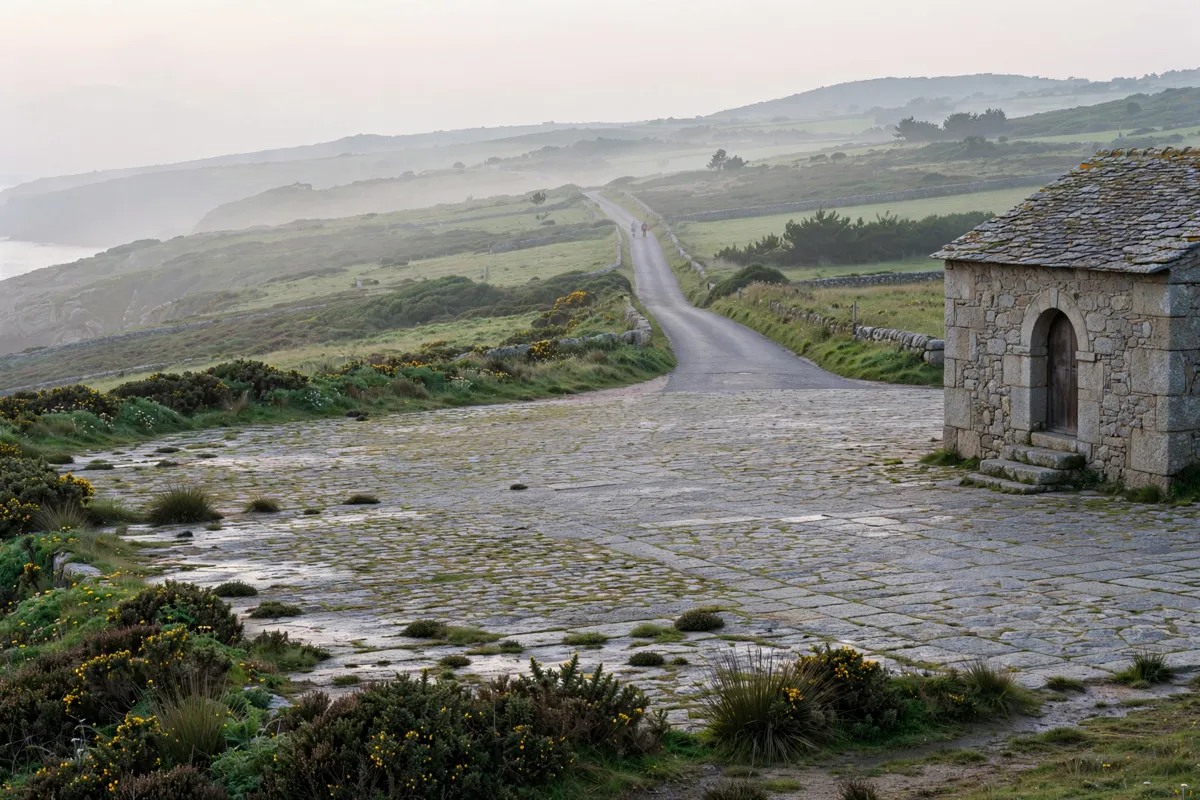
Visiting respectfully and checking access
The Holy Door serves as the temple entrance during Holy Year events and bears the coats of arms of the Feijoo and Recamán families. Since access arrangements may depend on when you visit, check the official site before you go. The published access direction is to take the road from the municipal centre toward Cabo Fisterra.
Walking there from the town center
You can combine the church with other Finisterre sights on a town walk, including Castelo de San Carlos.
To reach the church on foot, head from Fisterra’s municipal centre along the road toward Cabo Fisterra. Its position at the foot of Monte San Guillermo places it along the approach to the cape.
A Cabo Fisterra visitor guide can help you plan the onward visit.
FAQs
What is the church’s official name?
Its Galician name is Igrexa de Santa María das Areas. It is also referred to in Spanish as Iglesia de Santa María de las Arenas.
What architectural styles can you see?
The church combines Romanesque, Gothic and Baroque elements, reflecting construction and additions across several centuries.
Is Santa María das Areas on a pilgrimage route?
Yes. Tourism of Galicia places the church on the Camino de Fisterra-Muxía.